The majestic peaks and verdant valleys of the Alps have long inspired builders and artisans to devise structures that resonate with their stunning surroundings. Traditional wooden houses and chalets stand as testaments to human ingenuity, embodying a rich tapestry of regional tradition, skilled craftsmanship, and a deep communion with the natural world. This article delves into the evolution, defining characteristics, and enduring appeal of Alpine wooden architecture.
History and Origins of Alpine Wooden Architecture
The roots of wooden construction in the Alps extend back to prehistoric times, when early mountain dwellers harnessed the abundant forest resources to create simple shelters. Over centuries, these rudimentary structures evolved under the influences of climate, social needs, and cross-border exchanges. By the Middle Ages, stilted barns and log cabins had become common, providing both storage and living space in high-altitude meadows.
Several pivotal factors shaped this early phase:
- Forested Landscape: Vast stands of spruce, fir, and larch provided accessible building materials.
- Climatic Challenges: Heavy snowfall and harsh winters necessitated steep, overhanging roofs.
- Local Expertise: Generations of rural communities perfected joinery techniques long before industrial tools arrived.
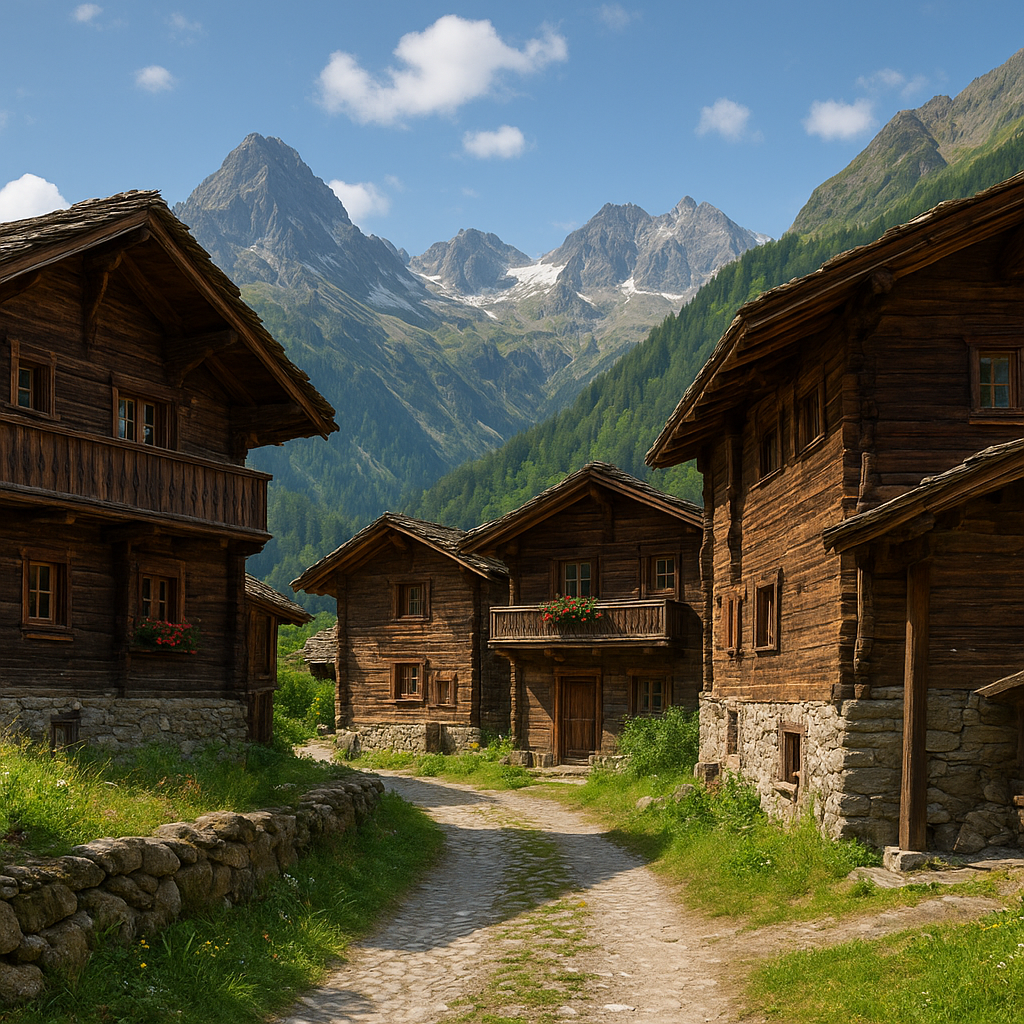
By the 17th century, the iconic Alpine chalet took form—a two-story dwelling combining living quarters above with livestock stalls below. This arrangement optimized warmth and simplified daily farm routines.
Architectural Features and Construction Techniques
Roof Design and Timber Framing
One of the most striking aspects of Alpine dwellings is their dramatic rooflines. Designed to shed snow, these roofs often feature:
- Extended eaves protecting walls from rain and snow melt.
- Steep pitches, ranging from 45 to 60 degrees, to prevent snow accumulation.
- Wooden shingles or slate tiles layered for insulation and longevity.
Timber framing in the Alps relies on precision joinery—mortise and tenon joints, dovetails, and wooden pegs. This approach ensures structural stability without metal fasteners that could corrode under constant mountain moisture.
Log and Plank Construction
Two dominant wall systems emerged:
- Log Construction: Horizontal logs interlocked at the corners, sometimes notched with intricate patterns reflecting local styles.
- Plank Construction: Vertical boards, often half-timbered or studded, providing greater flexibility in interior partitioning.
Both methods offered superior thermal performance, as thick wood walls retained heat and adapted to seasonal shifts.
Regional Variations Across Alpine Countries
While sharing core principles, Alpine wooden buildings exhibit distinct regional identities. From Italy’s South Tyrol to Austria’s Tyrol, Switzerland, France, and Germany, each area presents unique adaptations.
Swiss Chalets
- Deeply undercut balconies with carved balusters.
- Roof beams often left exposed, showcasing decorative carving.
- Window shutters painted with floral motifs.
In Switzerland, the postcard-perfect chalet symbolizes both rustic charm and refined alpine living.
Austrian Bauernhaus
- Combined living quarters and barn under one roof, known as “Einederhaus.”
- Heavy stone foundations protect against avalanches.
- Colorful frescoes on exterior walls illustrating rural life and religious themes.
Austrian farmhouses reveal a pragmatic design that balances agricultural functions with aesthetic embellishment.
Italian Alpine Houses
- Larchwood planks treated with natural oils to withstand humidity.
- Compact footprints adapted to terraced mountainsides.
- Slate roofs in regions with limited timber resources.
Italy’s mountain homes merge Mediterranean sensibilities with alpine exigencies, creating a distinct architectural vocabulary.
Material Selection and Environmental Considerations
Wood remains the quintessential Alpine building material, prized for its lightweight strength and renewable nature. Key species include:
- Spruce: Abundant and easy to shape, ideal for framing.
- Fir: Durable and resistant to rot, often used for beams.
- Larch: Naturally weatherproof, selected for exterior cladding.
Modern restorations emphasize sustainability by sourcing local timber, applying non-toxic treatments, and recycling reclaimed beams. This ecological approach not only preserves the heritage of wooden architecture but also reduces the carbon footprint associated with new construction.
Innovations in Restoration and Adaptive Reuse
Preserving Alpine wooden structures poses unique challenges: rot, insect infestation, and changing building codes. Today’s restorers blend traditional methods with contemporary technologies.
Laser Scanning and Digital Modeling
High-precision 3D scans document existing conditions, allowing craftsmen to fabricate replacement elements that match original profiles exactly.
Engineered Wood Products
Cross-laminated timber (CLT) panels and laminated beams provide enhanced strength while maintaining a wooden aesthetic. These materials facilitate:
- Sleek interior finishes that celebrate natural grain patterns.
- Prefabrication for efficient on-site assembly.
- Improved fire resistance compared to solid timber.
Energy Efficiency Upgrades
Insulation retrofits, triple-glazed windows, and underfloor heating systems deliver modern comfort without compromising the building’s historic character. By sealing air leaks and optimizing thermal mass, restorers achieve rigorous energy standards.
Cultural Significance and Tourism
Beyond mere dwellings, wooden chalets and barns serve as cultural symbols. Alpine communities celebrate their architectural legacy at festivals, where craftsmen demonstrate carving, shingling, and roof raising. Heritage trails guide visitors to centuries-old farmhouses, while museums curate tools and prototypes that trace the evolution of wooden construction.
Rural guesthouses, or “Almhütten,” invite tourists to immerse themselves in mountain life. Wooden interiors, cozy stoves, and panoramic views foster a sense of continuity with ancestral traditions. Increasingly, these establishments emphasize eco-friendly practices, sourcing local food, generating geothermal energy, and promoting low-impact hiking routes.
Conclusion
The traditional wooden architecture of the Alps stands at the intersection of art, function, and nature. Each timber beam, carved bracket, and overhanging roof tells a story of adaptation to a rugged environment and reverence for the forest. Through careful restoration and sustainable innovation, this remarkable building heritage will continue to inspire future generations, honoring a profound connection between human habitation and the mountains that cradle it.