The European Alps offer a thrilling playground for those seeking to master the art of ice climbing. Towering peaks, vast glaciers, and frozen waterfalls combine to create an environment where determination and skill meet nature’s raw power. Embarking on this journey requires both mental and physical preparation, but the reward is an unforgettable adventure that hones your senses and pushes your limits. Whether you’re a novice yearning for your first crampon steps or an experienced alpinist refining your technique, the Alps present myriad opportunities to conquer the ice world.
Understanding Alpine Ice Climbing
Before venturing into the frozen realms of the Alps, it’s crucial to grasp the fundamentals. Ice climbing is more than simply ascending a vertical sheet of ice; it demands precise use of specialized tools, body positioning, and an intimate knowledge of the ever-changing mountain environment.
- Equipment: Ice axes, crampons, ice screws, harnesses, and helmets form the core kit. Investing in high-quality gear ensures reliability in harsh conditions.
- Glacier Travel: Many routes involve traversing crevassed glaciers. Proper crevasse rescue skills and rope techniques are mandatory.
- Safety Systems: Learning to place ice screws effectively and build secure anchors underpins every safe ascent.
- Weather Patterns: Alpine weather can shift rapidly. Understanding forecasts helps avoid dangerous storms and unstable ice formations.
Developing solid fundamentals with certified instructors sets the stage for safe progression. A strong base in Alpine climbing principles reduces risks and builds confidence.
Top Destinations in the Alps
The Alps span eight countries, offering a diverse range of ice climbing playgrounds. Here are some acclaimed locations:
Chamonix, France
Renowned as the cradle of modern alpinism, Chamonix beckons with steep couloirs and frozen waterfalls. The Vallée Blanche glaciers also provide gentle slopes ideal for beginners learning to use crampons and ice axes.
Grindelwald, Switzerland
Set against the iconic Eiger North Face, Grindelwald features technical ice routes such as the Gletscherfluh. With numerous icefalls accessible from the village, climbers can practice multi-pitch climbing under expert guidance.
Pitztal, Austria
The Pitztal Valley offers stable winter conditions and well-organized training centers. Both single-pitch and multi-pitch ice routes are available, catering to a wide range of abilities.
Cogne, Italy
Cogne boasts hundreds of bolted ice routes in a picturesque valley. The dozen-plus frozen waterfalls create varied gradients and lengths, making it a hotspot for progression in mountaineering ice climbing.
Essential Gear and Techniques
Successfully climbing ice requires precise handling of your tools and an awareness of body dynamics. Below are key aspects to focus on:
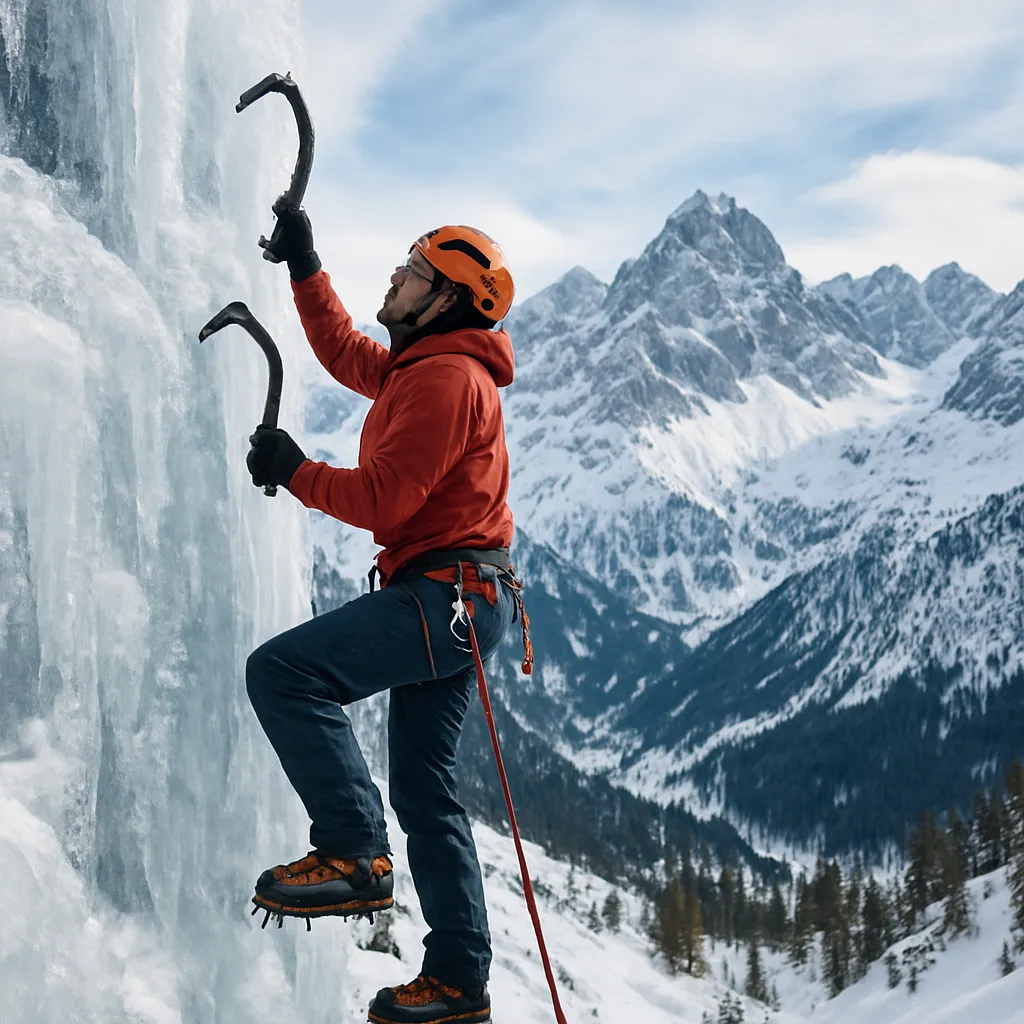
- Ice Axes: Choose axes with curved shafts for steep terrain. Learn the “leashless” technique to improve swing efficiency and reduce fatigue.
- Crampon Placement: Maintain a balanced stance by keeping your feet hip-width apart. Solid front-point placements are vital on vertical ice.
- Swing Technique: A controlled, confident swing creates better tool placements. Practice both vertical and horizontal swings to adapt to different ice textures.
- Screw Placement: Insert ice screws at a slight upward angle to enhance anchor strength. Space screws evenly for multi-pitch protection.
- Rope Management: Climbing on ice often involves complex belays. Familiarize yourself with friction hitches, Munter hitches, and knots like the figure-eight.
Repetition and guided practice accelerate skill acquisition. Joining a course led by experienced guides ensures you master these techniques safely.
Safety and Preparation
Ice climbing presents inherent hazards: falling ice, avalanches, hidden crevasses, and sudden weather changes. A proactive safety mindset mitigates these risks:
- Route Assessment: Study topo maps and recent trip reports. Check avalanche bulletins for snowpack stability.
- Personal Fitness: Upper-body strength, core stability, and cardiovascular endurance are essential. Incorporate targeted workouts months before your trip.
- Layering Systems: Use moisture-wicking base layers, insulating mid-layers, and a weatherproof outer shell. Frostbite prevention hinges on proper layering.
- Group Dynamics: Climb with partners of similar experience. Establish clear communication signals for icefall hazards and rope management commands.
- Emergency Planning: Carry a compact avalanche shovel, probe, and a personal locator beacon. Know the local rescue numbers and practice mock drills.
Combining thorough preparation with constant vigilance allows you to embrace the challenge without compromising safety.
Local Culture and Environmental Stewardship
Beyond the ice, the Alps are home to centuries-old mountain villages, traditional cuisine, and vibrant local customs. Respecting this heritage and preserving the fragile alpine ecosystem is vital.
- Support Local Guides: Hiring certified local guides fosters sustainable tourism and honors generational mountaineering knowledge.
- Leave No Trace: Pack out all waste, minimize chalk use, and avoid disturbing wildlife during alpine expeditions.
- Cultural Etiquette: Learn basic greetings in French, German, or Italian, depending on your destination. Engaging politely with locals enriches your journey.
- Conservation Initiatives: Participate in community-led trail maintenance or glacier monitoring programs when possible.
By combining respect for local traditions with environmental responsibility, every climber becomes a guardian of the Alpine wonderland.